IBM Design Thinking
How do you scale a new way of thinking without it turning into a process?
IBM Design Thinking had already worked. That was the strange part. So the problem wasn’t belief. The problem was helping it to spread.
A method that needs someone standing next to it, translating it in real time, isn’t really a method yet. It’s a dependency with a nice name.
By 2015, IBM Design Thinking needed to travel without us. Across product teams, services teams, sales teams, client teams, and a company with more than 380,000 people at the time, many of whom didn’t wake up thinking of themselves as designers. They didn’t need a shrine to the method. They needed to understand what to do next, and more importantly, why.
We got design thinking out of the workshops and into the work.
A packaging issue
I still like that phrase because it sounds smaller than it is. Packaging sounds like surface. It sounds like layout, naming, a better diagram, maybe a friendlier website. And yes, it was partly all of that. But packaging is also how an idea survives contact with people who didn’t help make it.
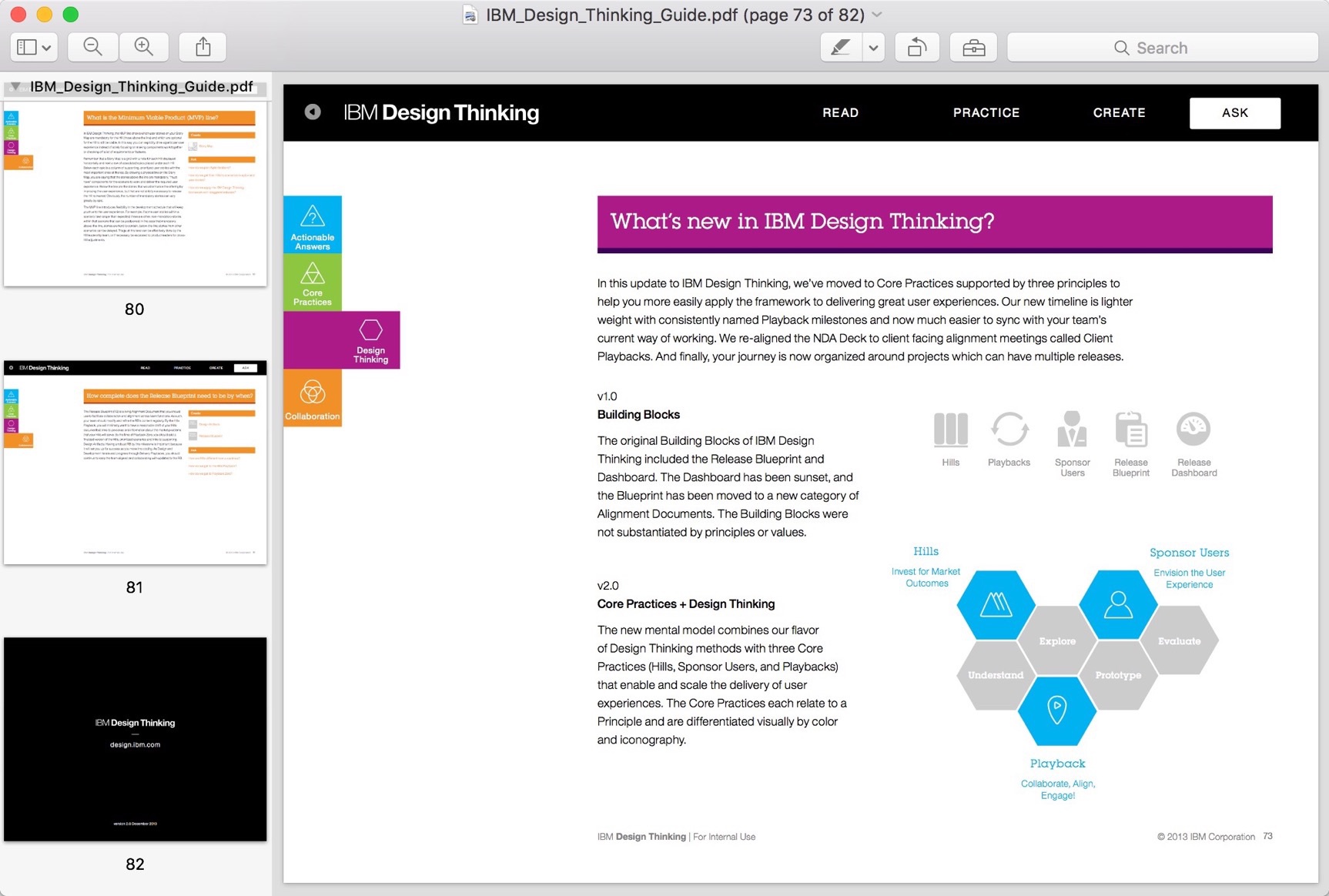
We found three problems underneath the second version of IBM Design Thinking.
Content
Too dense for people to form a resilient mental model, creating a dependency on artifacts and rigid practices.
Scope
Software-product-team-specific. People saw a narrow set of practices, for a narrow scale of problems.
Scale
Static PDFs and high-touch Designcamps weren’t meeting 380,000+ IBMers, clients, and customers where they were.
“The writing is so academic; I wish it were more friendly and approachable.”
IBM executive, Office of the CIOThat sentence was a gift. Slightly painful, but useful. The useful ones often are.
Everyone, every day, everywhere
That sounds impossibly broad. It almost sounds like the kind of thing you write before reality has had its say. But I don’t think we meant it as a slogan. We meant it as a hypothesis.
Inclusive
Beyond designers, product teams, or even IBMers. Aligning on real people’s experiences drives outcomes on any team.
Continuous
Beyond workshops and artifacts. Getting teams to think critically, at any scale, about their everyday work.
Flexible
Beyond building software. Any domain, whether closing a deal or redesigning a high-school curriculum.
Approachable
More transparency with sponsor users. Better empathy within whole teams. Higher-quality outcomes, faster, at scale.
Design thinking gets mushy when people talk about empathy as if the goal is to feel good about themselves. The point wasn’t to make teams nicer. The point was to help them make better decisions because they understood the people those decisions would affect.
Keeping the idea intact
My title was Design Principal and Project Director, but the role was less tidy than that. I was trying to keep the idea intact while it moved through writing, design, code, animation, stakeholder review, publishing constraints, and the natural entropy of a large organization. That’s where intent usually gets lost.
A sentence gets softened. A visual decision becomes decoration. A developer gets handed a design that can’t be built cleanly. Everyone makes a reasonable compromise, and somehow the thing that ships no longer resembles the thing you meant.
I directed the content tone so the reader could focus on intent instead of parsing the writing. I directed Perception, a 15-second animation that had to explain the heart of the concept quickly. 15 seconds is a rude constraint. Useful, though. You can’t hide a muddy idea inside 15 seconds.
I co-created the Loop. And I pushed for the larger story behind the framework, because IBM Design Thinking couldn’t survive as a collection of activities. If people were going to carry it, they needed a storyline they could retell.
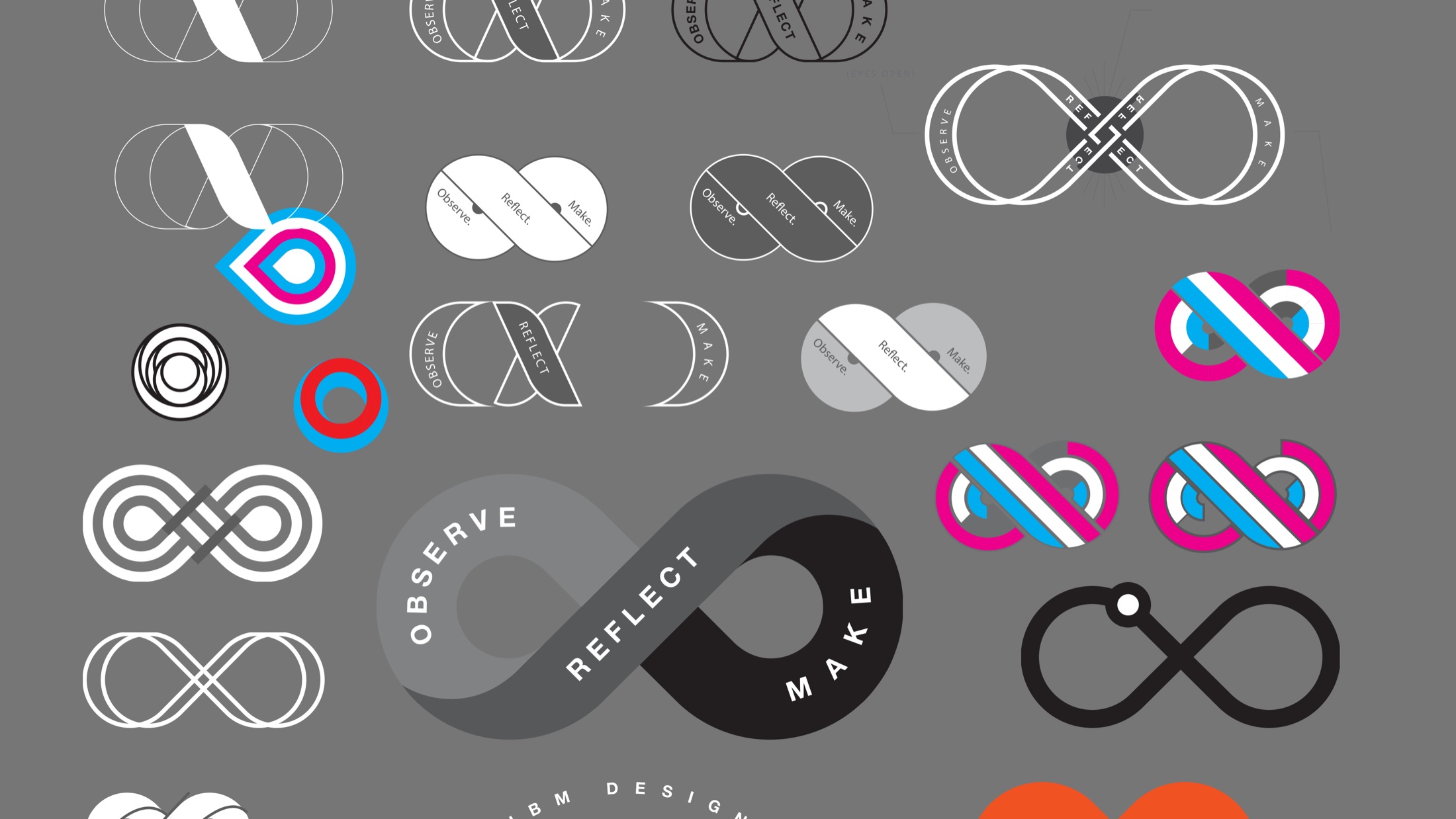
I still believe visual design is at its best when it changes what someone can understand. Beauty matters, but beauty without usefulness is a very expensive fog machine.
The site was part of the method, too. A framework about continuous improvement couldn’t arrive as a static PDF or a brittle website built through a long chain of handoffs; we’d have contradicted ourselves before anyone read a word. So we built our own content system on GitHub and Gulp, kept designers and developers close enough that the visual system could be expressed in code, and delivered the first Bluemix (IBM Cloud) app running inside the ibm.com framework. A method about better work needed to arrive as better work.
The Loop
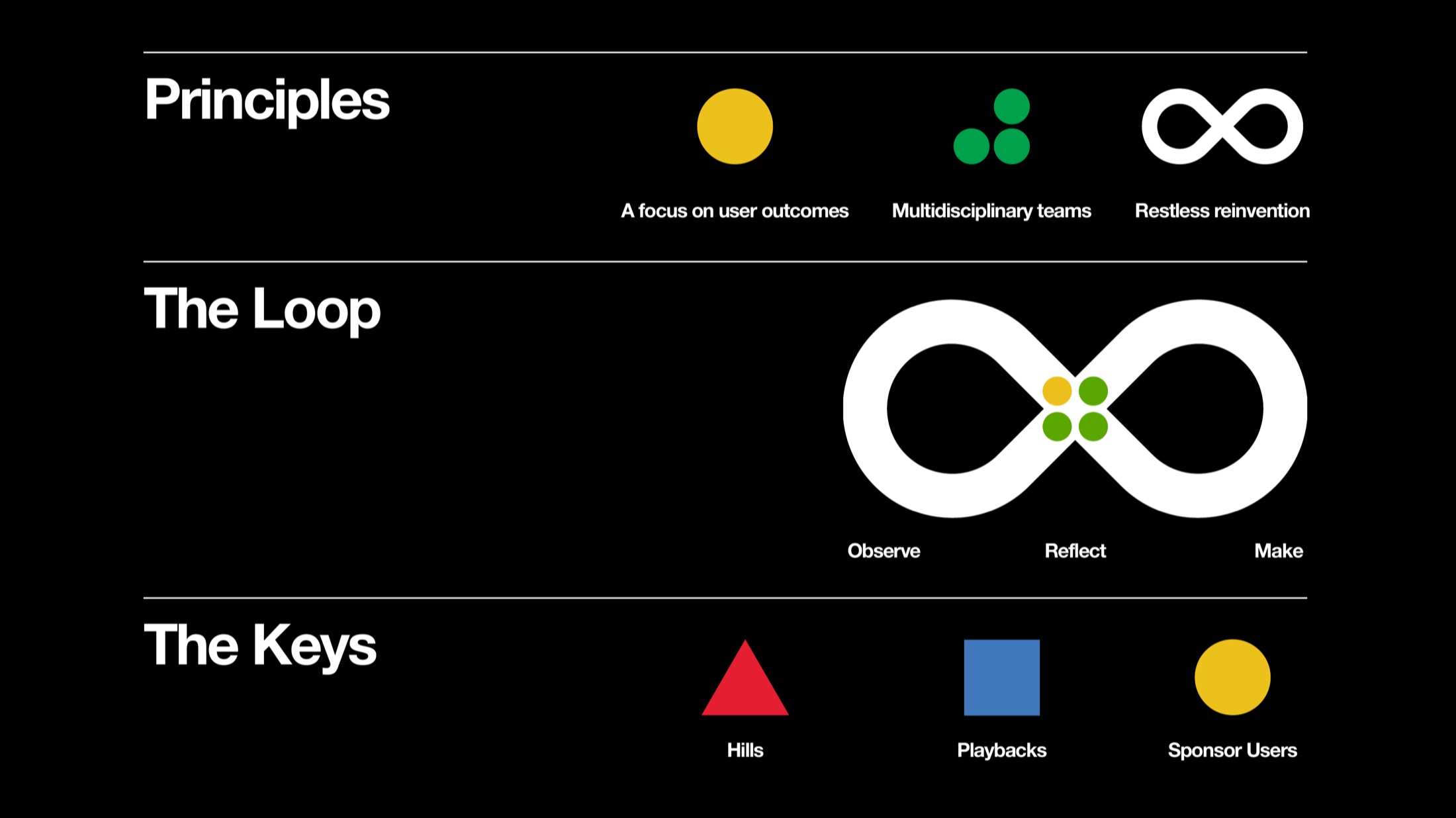
The sentence we wrote was simple: IBM Design Thinking is what happens between the problem and the solution. That became the handle.
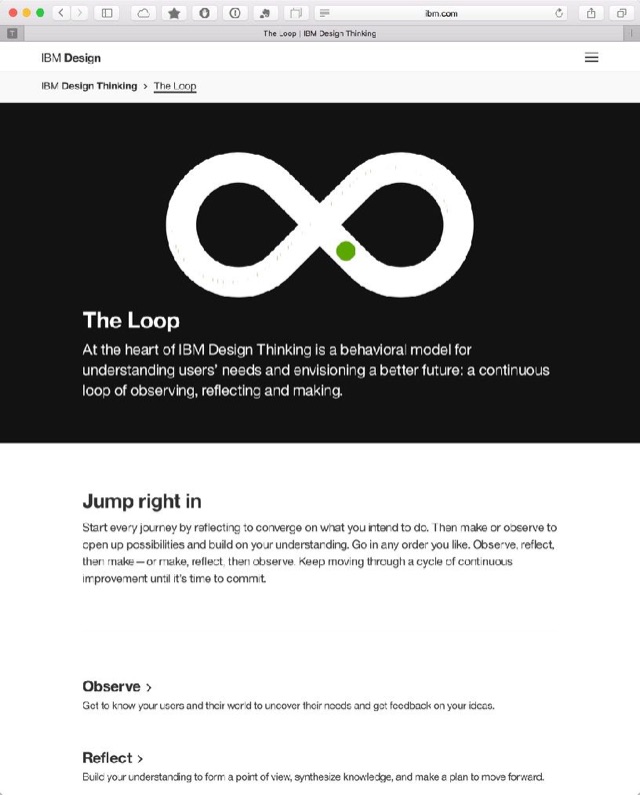
The Loop looks obvious now. Observe. Reflect. Make. Three words. A continuous line. A way of moving from the world, into sensemaking, into action, and back again. Yet, it didn’t feel obvious while we were making it.
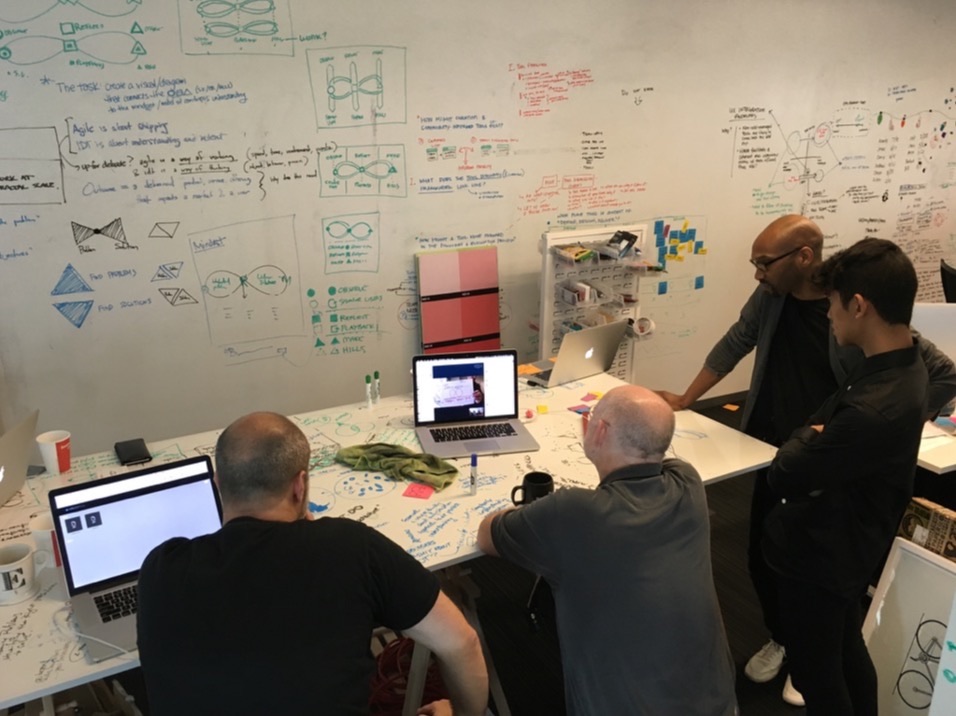
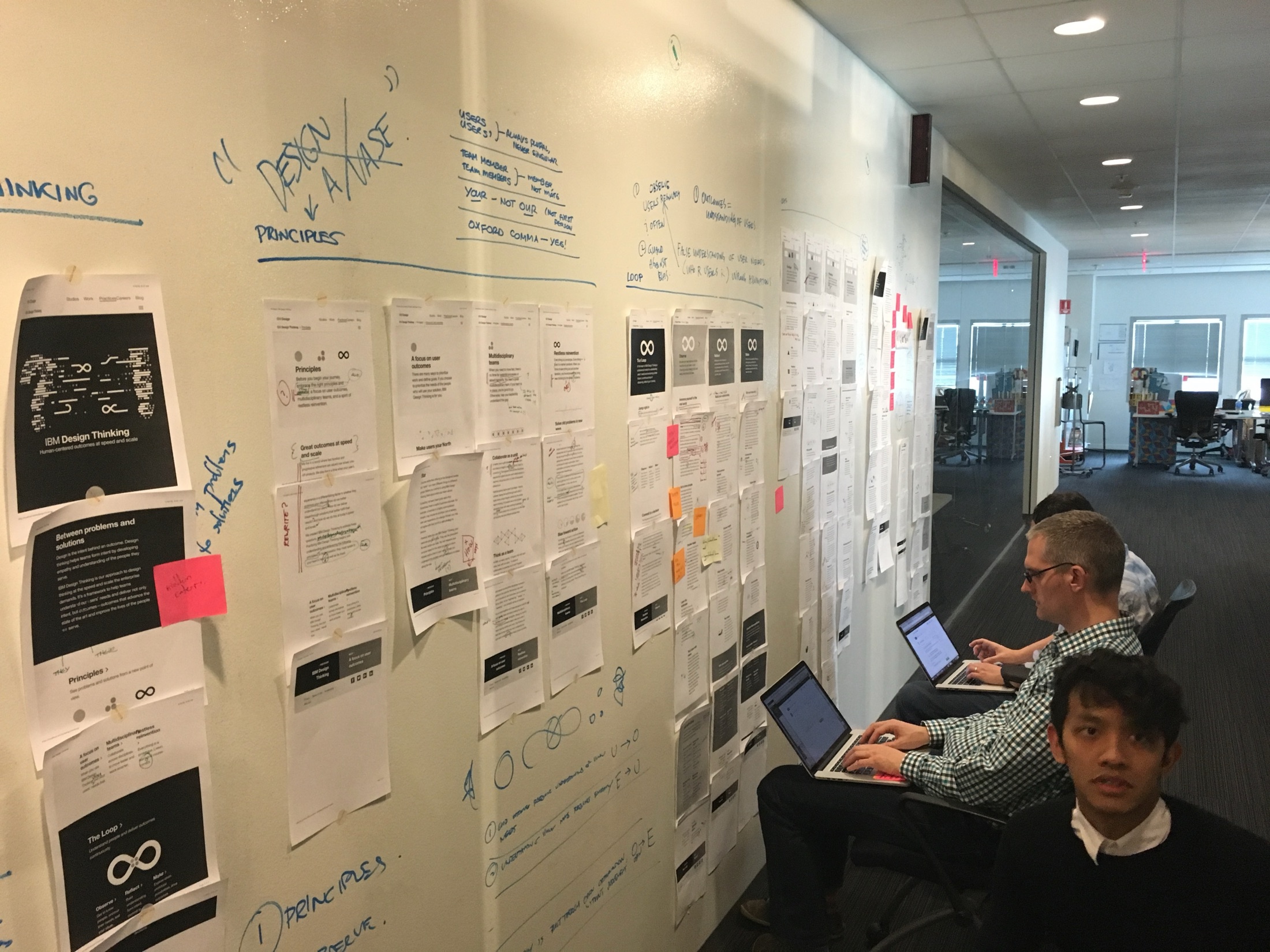
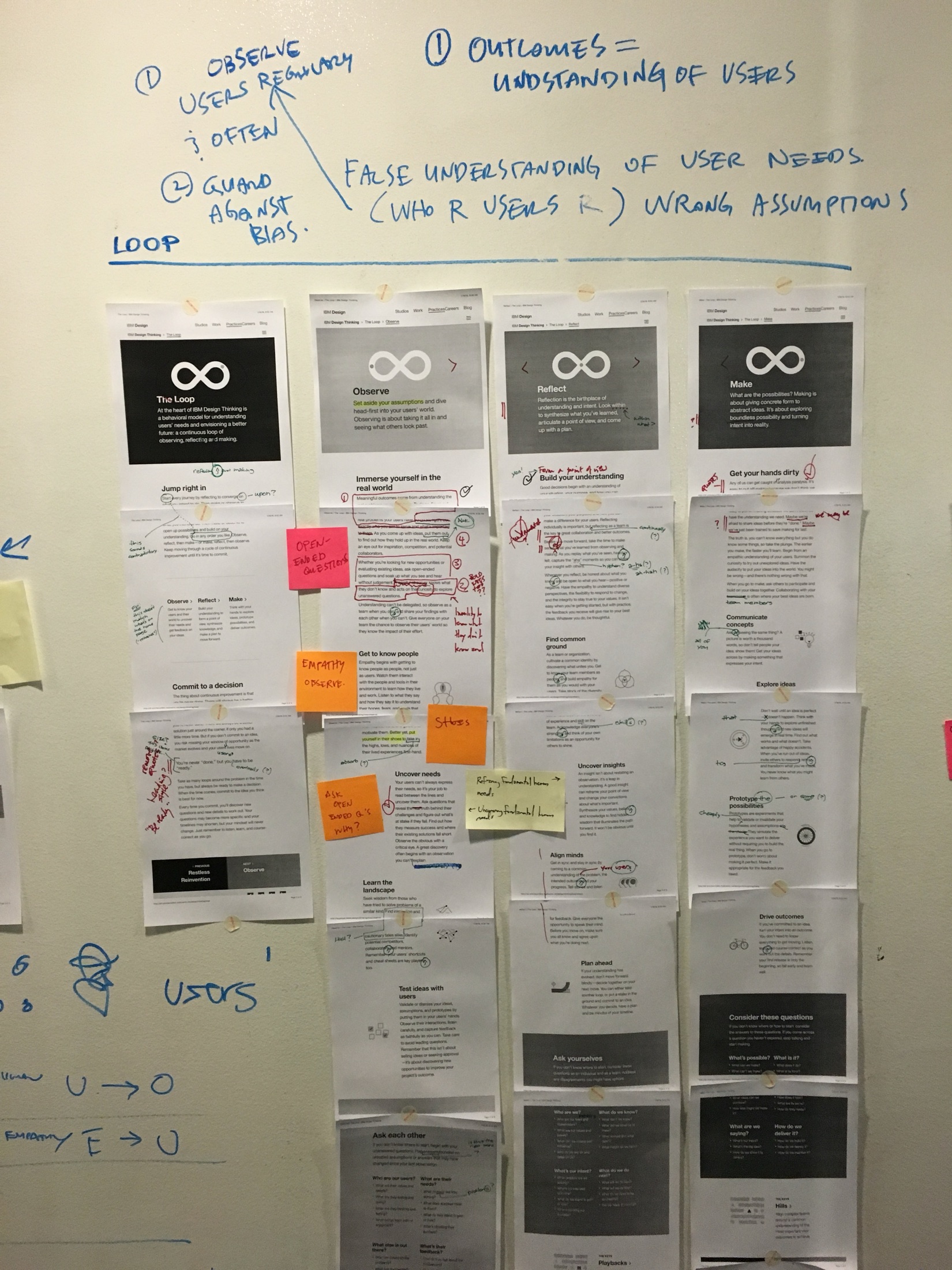
We sketched hundreds of versions. Probably thousands, if I’m being honest about the walls and tables and notebooks involved. We tested the model with people all over the studio, with sponsor users, with stakeholders, with people seeing it for the first time. The question was always the same: do they get it fast enough to use it? Not admire it. Not decode it. Use it.
The previous mental model had too much phase energy in it. It made the work feel like something you moved through and completed. We wanted a model that made learning feel continuous. Observe meant staying open to what people actually do, not what the team wishes they did. Reflect meant making sense before rushing toward certainty. Make meant giving the idea a form early enough that reality could push back. Then around again.
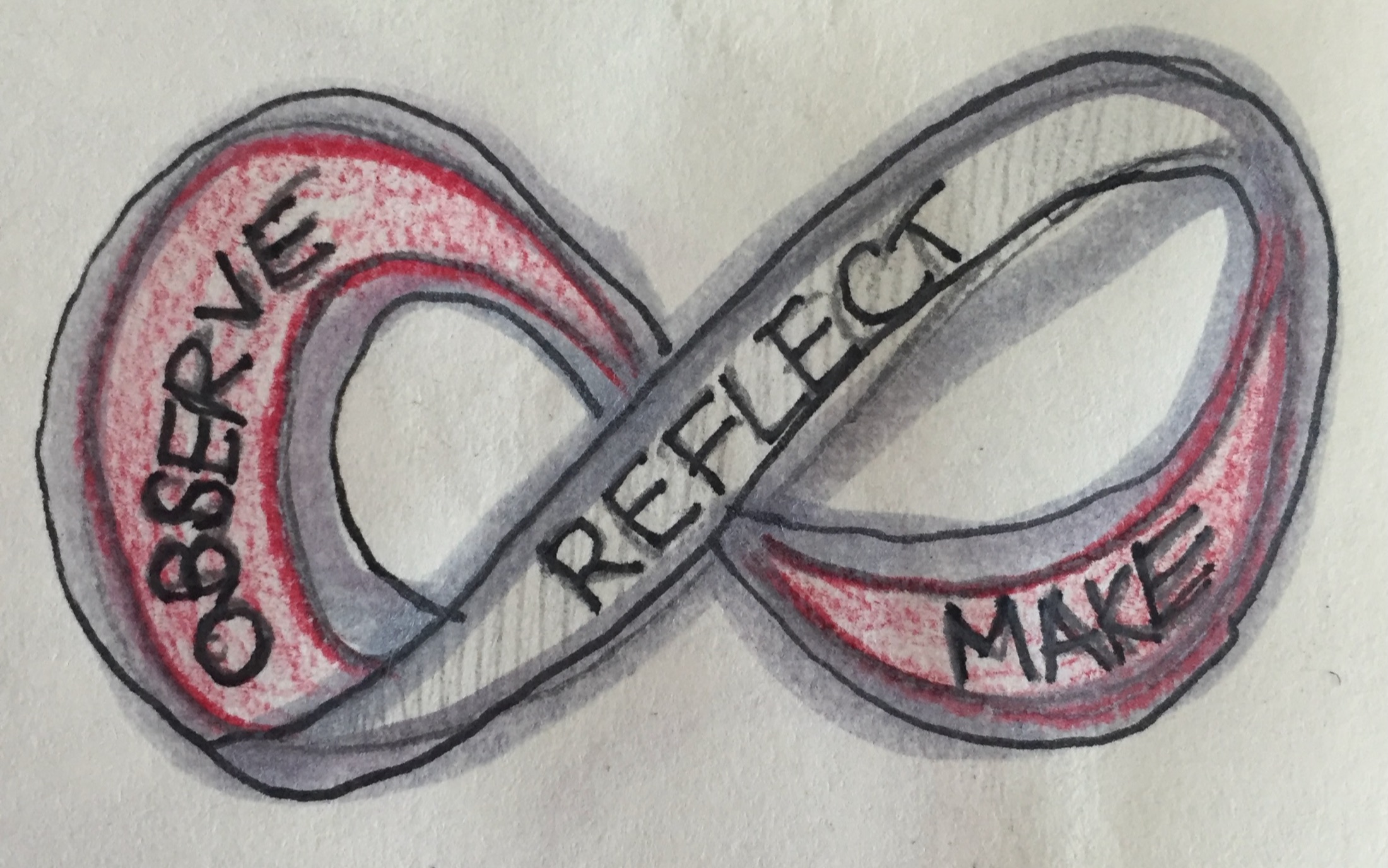
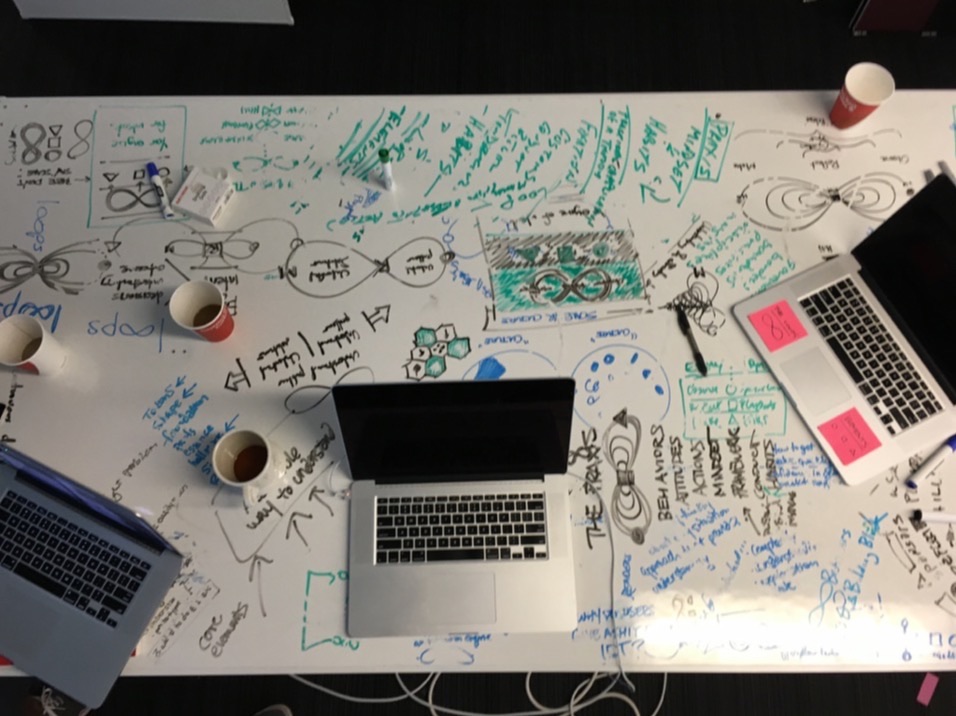
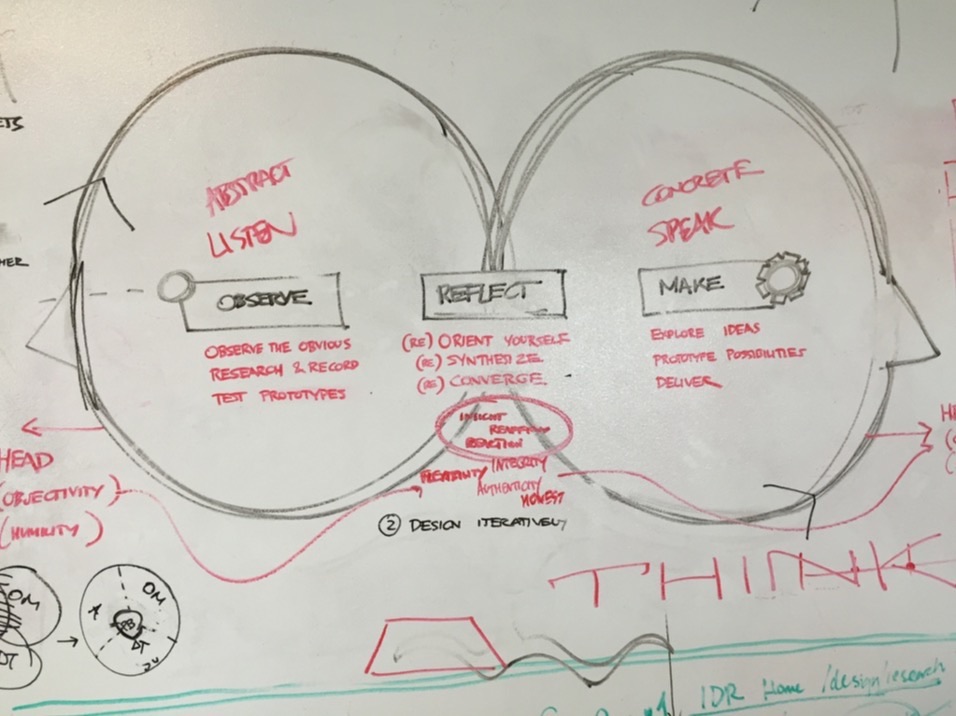
The first major pass at the work was a 12-week collaboration with the Dun Laoghaire Institute of Art, Design and Technology in Dublin, Ireland: four of their strongest students, their advisory professors, and one of my best young designers, Mirko Azis. Large organizations develop private dialects. Sometimes you need people close enough to understand the assignment and far enough away to tell you when your words have started folding in on themselves.
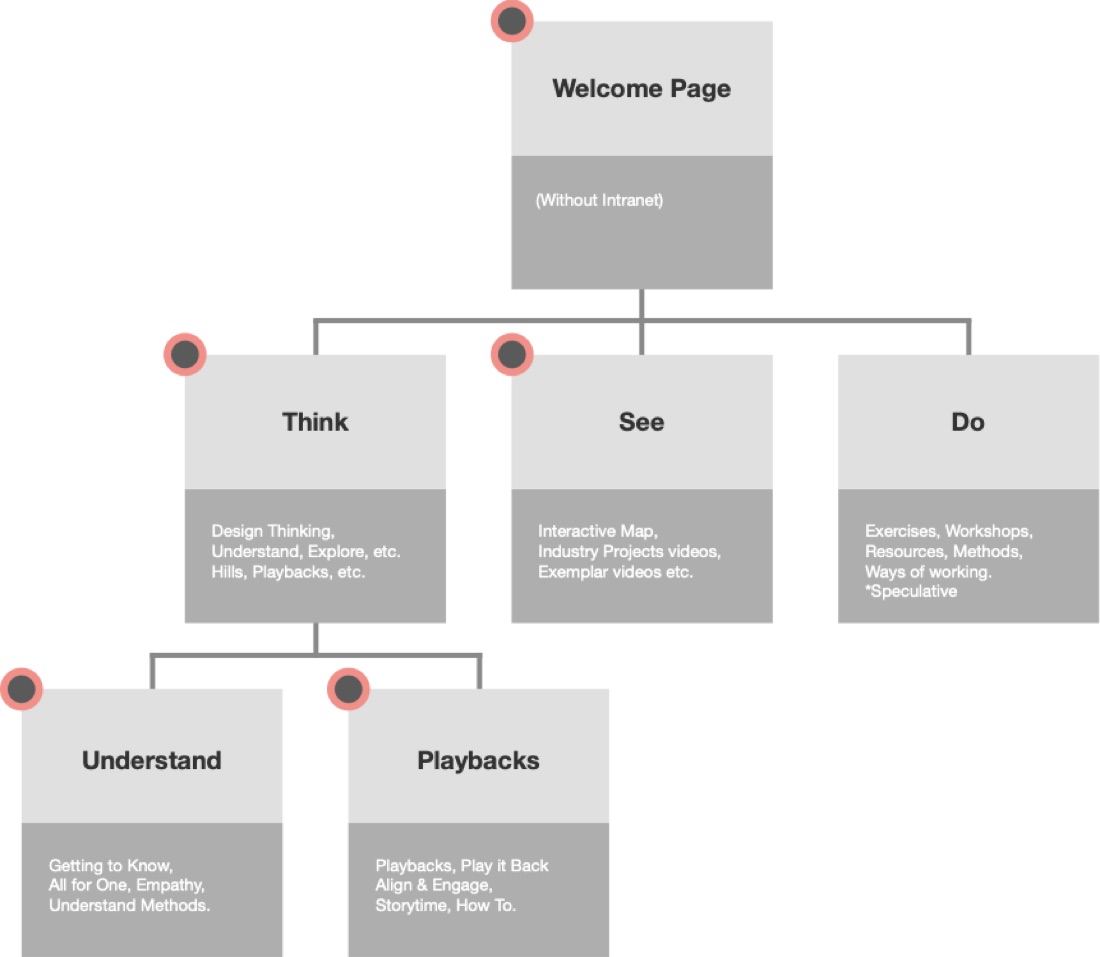
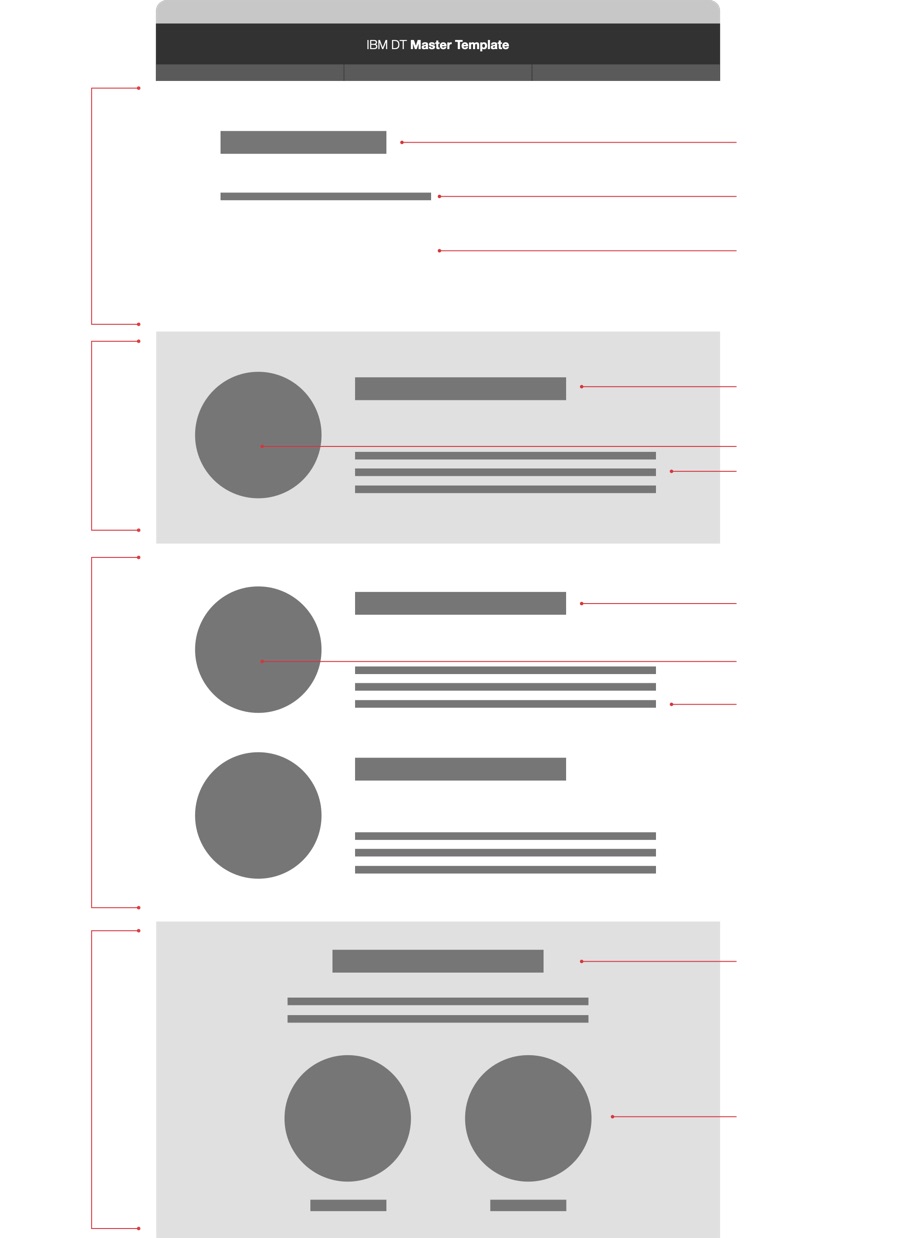
The approach also made “fail fast, learn well” feel less like a poster and more like a way of working. Most organizations say they like early failure. Many quietly punish it. The Loop gave us a way to make learning feel less like an admission of weakness and more like the motion of the work itself. That was the behavior change we were after.
Released 21 January 2016
The response was strong, internally and externally. People noticed that IBM had opened up its design thinking practice. They noticed the clarity. They noticed that IBM was treating design as a business driver, not a craft service parked at the edge of the process.
Teams using the practice cut initial design time by 75%, development and testing by 33%, and design defects in half. Products reached market twice as fast.
“IBM killed it with their design thinking site.”
“IBM integrating design thinking into technology. Could have more impact than anything a design org could ever have.”
“IBM’s got a plan to bring design thinking to big business.”
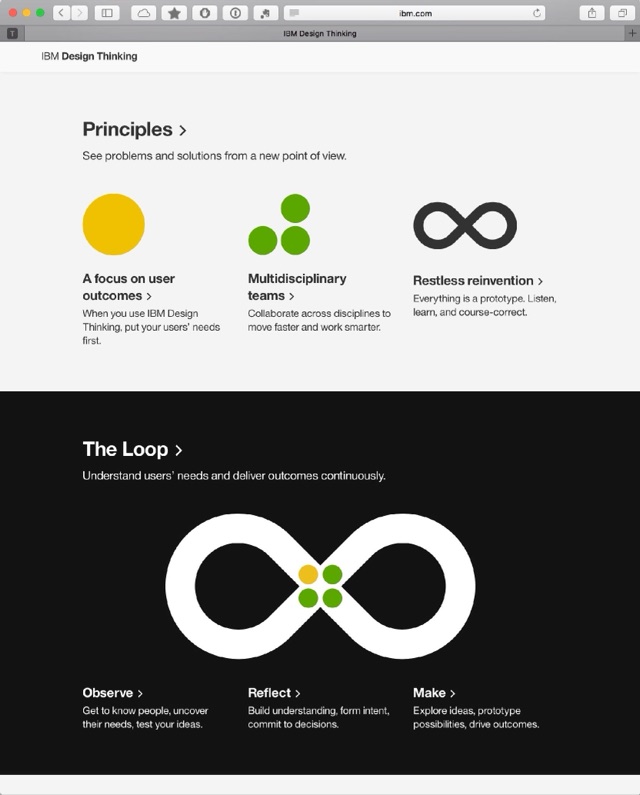
Those responses mattered. But what mattered most was that the method became easier to carry. Easier to remember. Easier to teach. Easier to use when no one from the original team was in the room.
The Loop gave people a mental model they could remember. The scope expanded beyond software product teams. The website gave the method a home that could actually evolve. I don’t think of that work as making design thinking simpler. That sells it short. I think of it as making the intent more durable.
What still matters
This work is older now, but I trust the lesson more than I did when we made it.
AI has made the distance between an idea and an artifact almost uncomfortably short. A screen can show up before the team understands the behavior it’s trying to support. A strategy can sound finished before anyone has agreed on the problem. A prototype can feel real enough to stop the harder conversation from happening. That’s useful, obviously. I use it every day. It’s also a very efficient way to get lost.
The Loop still matters because it slows down the part that shouldn’t be automated away. Look at what’s actually happening. Make sense of it. Give the idea form. Put it back in front of the world and see what it does there.
The tools changed. The responsibility didn’t. Someone still has to know what the work means.